
Two People, One Promise.
Engagement Ring vs Wedding Band: What Is the Difference, and Do You Need Both?
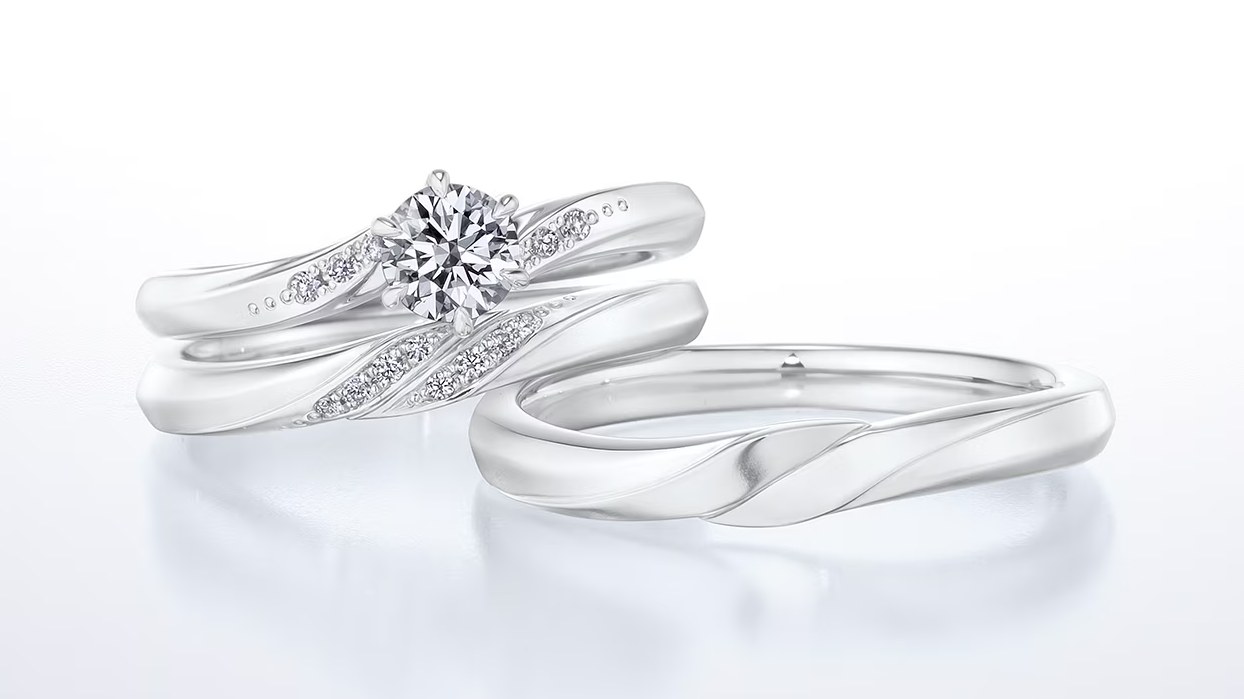
Every love story holds two promises. The first is spoken at the proposal; the second, at the wedding. One ring marks each moment, and the two are made to meet. Here is how they differ, why most couples choose both, and how to choose rings that belong together.

Engagement ring vs wedding band
Two rings, two moments in one love story.
The engagement ring is given when one partner proposes. It is the promise, and it is made to be noticed: a single diamond, set high so the light can find it.
The wedding band is exchanged at the wedding or solemnisation. It is the vow, and it is made to be lived in: slimmer, closer to the finger, and worn by both partners through every day that follows.
View engagement rings| Engagement ring | Wedding band | |
|---|---|---|
| When it is given | At the proposal | At the wedding or solemnisation |
| Who wears it | Usually one partner | Usually both partners, as a pair |
| Typical design | A centre diamond, often raised in a setting | A slimmer band, plain or set with small diamonds |
| Daily wear | Often kept for special occasions, unless designed to stack | Worn every day |
| Which finger | Left ring finger | Left ring finger, closest to the hand |

Why an engagement ring carries a diamond
A bond that cannot be broken, a promise without a cloud.
Diamond is the hardest natural material, which is why it has long stood for a bond that will not break, and its clear brilliance for a promise without a shadow.
At Ginza Diamond Shiraishi, both centre and side diamonds feature the exquisite Hearts & Arrows pattern, and over 99% of our diamonds receive “Ultimate”, the highest grade awarded by Sarine Light.
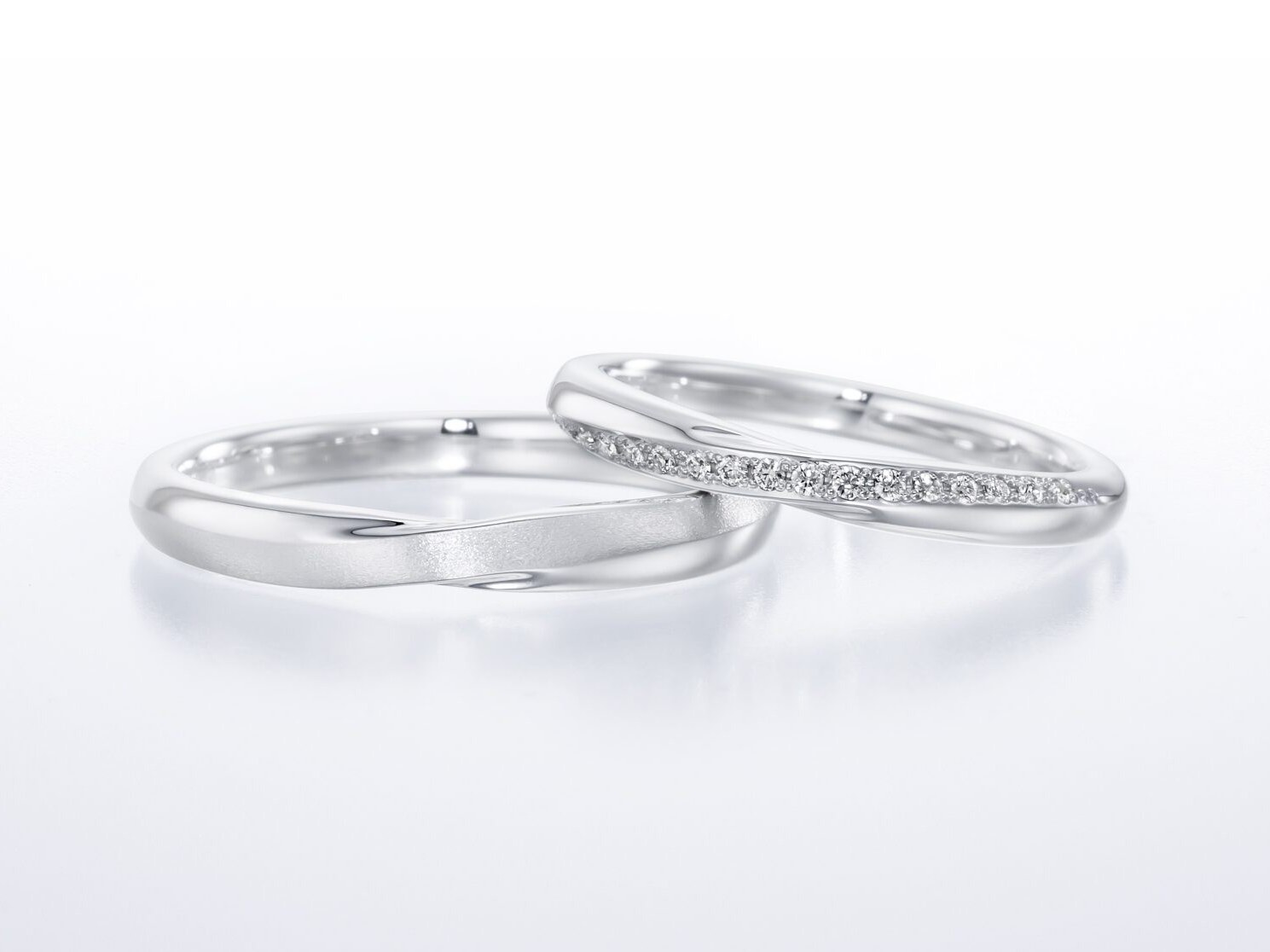
Why wedding bands are simpler
Made for every day of a shared life.
A wedding band goes to work, into the kitchen and through every season, for decades. So it sits close to the finger and keeps a quiet line that does not catch.
Each Ginza Diamond Shiraishi wedding ring features a subtly curved inner surface, providing exceptional comfort and a smooth feel when worn. Over the years a band gathers fine marks from the life it shares, and many couples come to treasure them.
View wedding rings
Do you need both rings?
Many couples choose both, and wear them as one.
No rule says you must have both. Some couples choose a single ring and give more to the wedding or their first home. Yet the two rings mark different moments, and couples who skip the engagement ring sometimes wish, later, that they had one to remember the proposal by.
If you would like both without choosing between beauty and everyday ease, there is a third way. Ginza Diamond Shiraishi pioneered bridal ring sets designed to allow engagement and wedding rings to be beautifully stacked together.
In Live Allove, two lines meet through the centre diamond, so the engagement ring and wedding band are worn as one. Read how to stack your engagement ring and wedding band.
View bridal setsWhich finger, and which ring goes first
Closest to the heart.
Both rings are traditionally worn on the left ring finger, from an old belief that a vein ran from it to the heart. The wedding band goes on first, nearest the hand, and the engagement ring rests above it, so the vow sits closest to the heart.
Some couples in Singapore follow a family custom and wear their rings on the right hand. Both are right.
Choosing rings that belong together
Shape, metal and width, in harmony.
If you already have an engagement ring, bring it when you choose your wedding bands, and look at the two together on your hand.
Shape. A straight ring rests flush against a straight band; a curved one asks for a band that follows its line. Our guide to wedding band styles explains the shapes.
Metal. Matching metals read as one; pairing platinum with gold is a deliberate choice. See platinum or gold for your bridal rings before you decide.
Width. Rings of a similar width sit in balance.
Frequently asked questions
QWhat is the difference between an engagement ring and a wedding band?
AAn engagement ring is given at the proposal and usually features a centre diamond. A wedding band is exchanged at the wedding or solemnisation, is usually worn by both partners, and is slimmer so it can be worn every day.
QDo I need both an engagement ring and a wedding band?
ANo. Many couples choose both because the rings mark two different moments, but some choose one ring. A bridal set, designed so both rings sit together comfortably, lets you wear both every day.
QWhich ring goes on first, the engagement ring or the wedding band?
ATraditionally the wedding band goes on first, closest to the hand, with the engagement ring on top, so the wedding band sits nearest the heart.
QWhich finger do engagement rings and wedding bands go on?
ABoth are traditionally worn on the left ring finger. Some couples follow a family custom and wear them on the right hand instead.
QCan I wear my engagement ring and wedding band together every day?
AYes, if they are designed to sit together. A bridal set is made so the two rings align without gaps and stay comfortable for daily wear.
QShould the engagement ring and wedding band be the same metal?
AMatching metals give the most unified look, but mixing metals can be a deliberate style choice. Compare the two side by side before you decide.
Two People, One Promise.
See the rings in person
How a band sits on your finger, how two rings meet and how a diamond holds the light are best seen on your own hand. Our consultants will measure your size and let you try as many designs as you wish.
Book an in-store appointment